A practical guide to choosing grease for ovens, kilns and other high-heat equipment.
High temperature grease
Every 10°C rise above 65°C cuts a standard grease's service life in half, turning a routine maintenance interval into an unplanned failure. A lubricant that lasts one month at 65°C will last only two weeks at 75°C, one week at 85°C, and just a few days at 95°C. This is a widely used rule of thumb in the lubrication industry, not a claim specific to any one brand of grease, and it follows directly from how heat accelerates oxidation in mineral and synthetic base oils alike. For teams running ovens, kilns, dryers or any asset that sits at sustained high heat, the practical result is the same: a relubrication plan built for room temperature stops working long before the calendar says it should.
Browse the full overview of all heat resistant greases and assembly greases
Why heat destroys grease faster than you think
Grease is not a static barrier. Heat speeds up oxidation of the base oil, breaks down the thickener, and evaporates the lighter oil fractions, so film strength drops exactly when the bearing needs it most, often visible as a hard, varnish-like deposit rather than a properly viscous film (viscous or varnish: how to tell the difference).
This creates a mismatch between the theoretical relubrication interval, calculated for standard conditions, and the practical interval a hot-running asset needs. In Interflon's diagnostic framework, this shows up as two root causes at once: aged lubricant, because oxidation and evaporation happen faster than planned (why heat causes oxidation and thermal degradation), and incorrect asset operating conditions, because the interval was never adjusted for the heat (why bearings fail prematurely and how to extend lubrication intervals).
What to look for in a high temperature grease
Dropping point is often mistaken for a grease's maximum safe operating temperature. It isn't: dropping point is the temperature at which the grease loses its structure and flows like a liquid, so it marks failure, not performance below that point. Some high temperature formulations have no classical dropping point at all, because the failure mechanism of a conventional soap-thickened grease simply doesn't apply to their base oil and thickener combination.
NLGI grade describes grease consistency, from soft (000) to hard (6), and determines how well it stays in place at a given bearing speed once heat has softened it further (how to match NLGI grade to operating conditions). Oxidation stability is the figure that actually predicts relubrication interval at sustained heat: the faster a grease oxidises, the sooner it needs replacing, whatever the dropping point says.
Compare Interflon high temperature greases
Interflon offers several high temperature grease and paste options, each suited to different operating conditions. Use the table below to compare operating temperature range, dropping point, NLGI grade, certification and PFAS-free status, so you can select the right product for your application.
| Product | Operating temperature range | Dropping point | NLGI grade | Certification | PFAS-free |
|---|---|---|---|---|---|
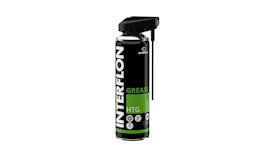
| Grease HTG | –20°C to 240°C (short-term to 270°C) | None | 2 | NSF H2 | Yes |
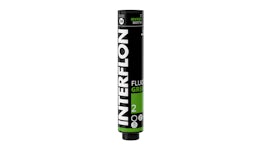
| Fluor Grease 2 | –30°C to 270°C | None | 2 | NSF H1, Halal, Kosher | No |
| Paste HT1200 | –20°C to 1200°C | N/A, assembly paste | N/A, assembly paste | NSF H1, NSF 537, ISO 21469, Halal, Kosher | Yes |
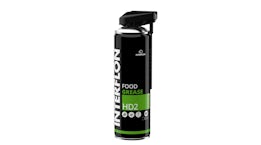
| Food Grease HD2 | –30°C to 180°C | >280°C | 2 | NSF H1, NSF 537, Halal, Kosher | Yes |
High temperature grease compared
Food Grease HD2 has a lower maximum temperature than the other products in this table, but it is included here because it combines NSF H1 and NSF 537 (PFAS-free) certification with resistance to steam, water and heavy contamination, making it the relevant choice when heat is combined with washdown, steam cleaning or wet processing, such as deep-frying autoclaves or meat-processing equipment, rather than dry, sustained high heat alone.
Interflon high temperature greases by application
Interflon offers multiple heat-resistant greases specifically designed for various industries. For example, the food industry demands lubricants that comply with strict safety regulations.
- Interflon Grease HTG covers general high-temperature industrial equipment up to 240°C continuous, with short-term tolerance to 270°C. It carries NSF H2 certification, for use where there is no possibility of food contact, making it a fit for kilns, ovens and drying tunnels outside food-processing areas.
- Interflon Fluor Grease 2 runs from –30°C to 270°C and adds chemical resistance to heat resistance, for environments where a standard grease would break down on contact with aggressive process media. It holds NSF H1 certification for incidental food contact and is Halal certified.
- Interflon Paste HT1200 covers an unusually wide range, –20°C to 1200°C, and holds the strongest certification stack of the three: NSF H1, NSF 537 confirming PFAS-free status, ISO 21469, and Halal. It is named for ovens and other high-temperature areas in food processing, including bakeries, pizza ovens and biscuit lines, where extreme heat and food safety compliance apply together.
- Interflon Food Grease HD2 covers –30°C to 180°C and carries the same NSF H1 and NSF 537 certification as Paste HT1200, but is formulated as a grease rather than an assembly paste, with added resistance to steam, water and heavy contamination. It fits applications where high heat combines with washdown or wet processing, such as deep-frying autoclaves and meat-processing equipment, rather than dry, sustained high heat alone.
For lubrication points that combine sustained heat with hard-to-reach access, an automatic lubrication system holds that interval without relying on a manual relubrication round.
Documented in the field
| Sector | Environment | Result |
|---|---|---|
| Food processing, oven bearings | >250°C continuous | Relubrication interval extended from weekly to every 3 weeks, bearing failure virtually eliminated |
| Automotive, oven conveyor system | 80–140°C | No failures in 8 years, previously every 3 to 4 months |
| Glass manufacturing, lamination furnaces | >200°C | Switched from continuous oil lubrication to grease, bearing replacements cut by roughly 80% |
| Printing, high-speed dryer | ~180°C | Bearing life extended 4 to 6 times |
How much downtime does the wrong grease actually cost?
A bearing that fails from heat-related lubricant breakdown rarely fails alone, it takes production schedules and maintenance budgets down with it.
56% of premature bearing failures are lubrication-related (SKF). Lubricants themselves typically account for only 1 to 3% of a plant's maintenance budget, yet poor lubrication influences 15 to 40% of that same budget through the unplanned downtime, replacement parts and labour it causes (SKF). At sustained high temperatures, where relubrication intervals shrink faster than scheduled, that gap widens further.
This is the reasoning behind Lubrication as a Service (LaaS®): a documented lubrication plan through Lubrication Managemnt Software (ILAC®), built around the actual operating temperature of each asset rather than a generic interval, closes the gap before it turns into a failure.
Documented results


Talk to a lubrication specialist
Not sure which product fits your operating temperature and certification requirements? A Technical Advisor can review your application and confirm the right fit before you order.
Frequently Asked Questions
The temperature a high temperature grease can withstand depends on the specific product. Interflon Grease HTG runs from –20°C to 240°C continuous, with short-term tolerance to 270°C. Fluor Grease 2 runs from –30°C to 270°C. Paste HT1200, an assembly paste rather than a grease, covers –20°C to 1200°C.
Whether a high temperature grease is food-grade safe depends on its NSF certification, not on its heat resistance alone. Fluor Grease 2 and Paste HT1200 are NSF H1 certified for incidental food contact, and Paste HT1200 additionally holds NSF 537 (PFAS-free) and ISO 21469. Grease HTG is NSF H2 certified, meaning it is intended for use in areas with no possibility of food contact.
How often high temperature grease should be reapplied depends on oxidation stability at the asset's actual operating temperature, not on a fixed calendar interval. As a working rule, every 10°C rise above 65°C halves a standard grease's service life, so the relubrication interval needs to shorten as operating temperature rises rather than staying fixed at the room-temperature schedule.
The difference between high temperature grease and regular grease sits in the base oil and thickener, not just in added heat resistance. Regular grease oxidises and loses film strength above roughly 65°C, while a high temperature formulation is built to resist that oxidation and hold its structure well beyond 120°C, in some cases with no classical dropping point at all, as with Grease HTG and Fluor Grease 2.
NLGI grade 2 is the standard choice for most high temperature bearing applications, including Interflon's Grease HTG and Fluor Grease 2, because it holds its consistency at higher operating temperatures without becoming too soft to stay in place. NLGI grade doesn't apply to assembly pastes such as Paste HT1200, which use a different consistency mechanism entirely.
Interflon Paste HT1200 is NSF H1, NSF 537 (independently verified PFAS-free) and ISO 21469 certified, with an operating range up to 1200°C. Food Grease HD2 carries the same NSF H1 and NSF 537 certification for applications up to 180°C where heat is combined with steam, water or contamination.