The lubricant is probably why
An assembly line rejects parts after lacquering
- The situation: A precision components manufacturer was rejecting 7,500 parts per day at the lacquering stage. The assembly lubricant was leaving a residual film that survived degreasing and prevented lacquer adhesion.
- The solution: One lubricant change. No machine modifications, no process changes.
- The result: Reject rate fell from 3% to 1%. Annual saving: €560,000. Lubricant consumption down 83%.
Every day, thousands of precision components pass through assembly and into the coating or lacquering phase, and some percentage never makes it out. Surface cracks. Poor adhesion. Finish defects that appear without a clear cause.
The machine gets checked. The lacquer gets tested. The process gets reviewed. The reject rate stays the same.
In most cases, the investigation stops too early. The lubricant used in the assembly phase, applied hours before the lacquering step, is rarely on the suspect list. It should be the first thing checked.
Five Signs the Lubricant Is the Root Cause
This case is directly relevant if your operation matches any of the following:
- Components are lubricated during assembly and then pass through a coating, lacquering, painting, or plating step
- You have a persistent reject rate in the finishing phase that has not responded to machine or process adjustments
- The defect pattern is inconsistent: some batches are fine, others are not, without a clear correlating variable
- You have already checked the coating material, the degreasing process, and the application equipment
- The lubricant in your assembly phase has never been tested for compatibility with your surface treatment process
If two or more of these apply, the rest of this page is worth reading carefully.
What was happening and why no one found it
A manufacturer of precision press studs for leading sports and luxury fashion brands produces 250,000 components per day. Each stud consists of two or three steel and brass parts, assembled under tight dimensional tolerances, then degreased and lacquered to a high-quality finish.
For a long time, 3% of daily production, 7,500 components, was rejected at the lacquering stage. Surface cracks in the finish. The rejection pattern was consistent. The cause was not.
The assembly machine had been checked. The degreasing process had been reviewed. The lacquer supplier had been consulted. Nothing changed.
The cause was the lubricant, and here is the exact mechanism:
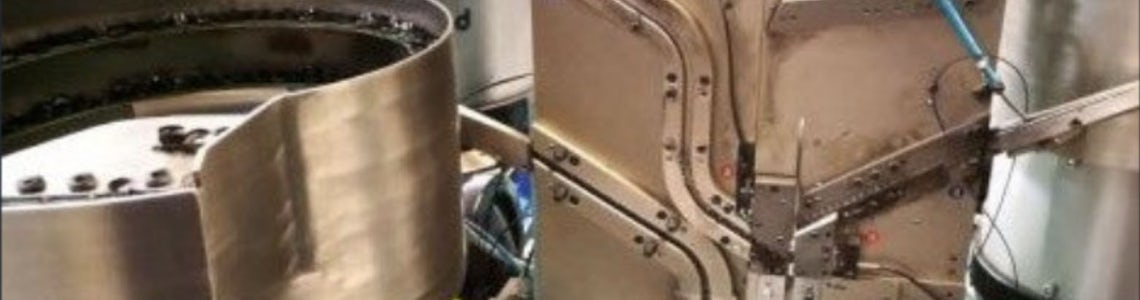
During assembly, the lubricant was applied to the components in the feeder trays to reduce friction between parts and guides as they moved through the press tools. The problem was not how it performed during assembly.
The problem was what happened next. Conventional lubricants leave a residual film on the surface of every component they contact. Standard degreasing removes the bulk of that film, but not the residue that has worked its way into the micro-structure of the pressed metal surface. Two factors compound this: the degreasing process is calibrated for bulk removal, not for the ultra-clean surface preparation that lacquering requires; and many conventional lubricants are not fully soluble in the alkaline or water-based degreasers typically used in these production lines.
When lacquer is applied over a surface with this residual contamination, adhesion is compromised at the micro-level. The lacquer bonds to some areas and not others. Under thermal or mechanical stress, the weaker bonding points fail, producing the surface cracks that were causing the rejections.
The lubricant was not failing during assembly. It was contaminating the surface after assembly, invisibly, and the damage only became visible three steps later. That is why the investigation kept finding nothing: the cause and the symptom were separated by an entire process stage.
Why changing the Lubricant fixed it
The existing lubricant was replaced with Interflon Food Lube (aerosol), fortified with MicPol® technology. Interflon Food Lube is a dry-film lubricant. After application, the carrier evaporates and leaves behind a thin, dry, bonded film. That film does not migrate, does not re-wet adjacent surfaces during transport or storage, and is chemically compatible with the degreasing and lacquering processes that follow.
Conventional wet lubricants leave a liquid or semi-liquid residual film that continues to migrate after application, spreading across the component surface, re-depositing during handling, and interacting chemically with the lacquer. It is this migration behaviour, combined with poor solubility in standard degreasers, that causes the adhesion failure.
The residue that was blocking lacquer adhesion is no longer present in the form that caused the problem. The degreasing step, unchanged, is now sufficient for the surface condition it receives. The defect mechanism is removed at the source.
No machine modifications were made. No process changes were required. The same application points, the same intervals, the same production line. Only the lubricant changed.
The lacquer cracking stopped immediately.
The results
| Metric | Before | After | Change |
|---|---|---|---|
| Daily reject rate | 3% | 1% | -67% |
| Rejected components/day | 7,500 | 2,500 | -5,000/day |
| Daily financial loss | €3,000 | €1,000 | -€2,000/day |
| Annual saving (280 days) | €560,000 | ||
| Aerosol cans/month | 140 | 24 | -83% |
| Total lubricant consumption | Baseline | -50% | Halved |
The payback period was a matter of weeks.
The reject rate did not fall to zero: a 1% baseline remains, attributable to dimensional tolerance failures that are normal in precision assembly and unrelated to lubrication. What disappeared entirely was the lacquer defect. Every remaining reject now has a different, traceable cause.
Monthly lubricant consumption dropped from 140 aerosol cans to 24. Because dry-film lubrication requires less product per application to achieve the same effect, inventory, procurement cycles, and chemical waste all fell in proportion.
Once the results were clear, the manufacturer also replaced the machine cleaning product with Interflon Eco Degreaser. The same logic applied: a pictogram-free cleaner with no hazard labelling requirements, safer for operators, and simpler to manage. One supplier, one system, one set of documentation.
The calculation
Before: 250,000 components x 3% reject rate = 7,500 pieces x €0.40 average value = €3,000/day
After: 250,000 components x 1% reject rate = 2,500 pieces x €0.40 average value = €1,000/day
Daily saving: €2,000 x 280 working days = €560,000 per year
This figure covers production waste only. It excludes the saving from reduced lubricant consumption, reduced procurement overhead, and the time previously spent investigating a problem that turned out to have a one-product solution.
What to do if you recognise this pattern
If your finishing or coating reject rate has a similar profile, persistent, not clearly machine-related, not resolved by process adjustment, the first step is a lubricant compatibility assessment.
That means identifying every point in your process where a lubricant contacts a component that subsequently undergoes a surface treatment, and checking whether the lubricant in use is chemically compatible with that treatment.
In most operations, this assessment has never been done. The lubricant was selected for its assembly performance, not its downstream compatibility. It is one of the first things an Interflon Technical Advisor checks.
Interflon Technical Advisors conduct this assessment on-site. The visit maps lubricant application points against downstream process requirements and produces a documented baseline. For assembly operations with finishing steps, this typically takes less than a day.
Frequently Asked Questions
Yes, the assembly lubricant can survive the degreasing step, and that is exactly what happened here. Standard degreasing removes bulk lubricant effectively but is calibrated for general surface cleaning, not for the ultra-clean preparation that lacquering requires. When the lubricant is not fully soluble in the degreaser being used, residue settles into the micro-structure of the pressed metal surface and remains there, invisible but sufficient to disrupt lacquer adhesion.
An inconsistent reject pattern is actually one of the signatures of lubricant-caused contamination. Application volume, ambient temperature, and dwell time between assembly and coating all affect how much residue ends up on the surface, which is why some batches pass and others do not. This variability is typically misread as a machine or process issue because the lubricant is not being monitored as a variable.
Using a food-grade lubricant does not rule out this problem. NSF H1 certification confirms a lubricant is safe for incidental food contact, but says nothing about its surface residue behaviour or compatibility with coating processes. What matters here is the film-forming behaviour of the lubricant, not its food-safety classification, and these are separate properties.
The improvement in lacquer quality after switching lubricant is typically immediate. Once the migrating residue is no longer being applied, components arriving at the coating phase carry a surface the degreaser can actually clean. The reject rate does not improve gradually; it falls from the point at which the new lubricant replaces the old one in the production cycle.
The saving scales directly with production volume, reject rate improvement, and component value. A Technical Advisor can build this calculation for your specific operation during an on-site assessment visit.
Reducing lubricant consumption by 83% does not risk under-lubrication because the reduction comes from needing less product per application, not from lubricating less frequently. Dry-film lubricants are inherently efficient: a thin bonded layer performs the same friction-reduction function as a thicker wet film, with the application points and intervals unchanged.